Translate

Sunday, December 18, 2016

“Witchcraft has not a pedigree” by Emily Dickinson


Witchcraft has not a pedigree, 
’Tis its own To-day 
— No Past avail’s 
— The Sophistry of Immortality —


In “Witchcraft has not a pedigree,” Emily Dickinson suggests that real power — whether it’s spiritual, creative, or emotional — can’t be inherited or neatly explained. “Witchcraft” is her metaphor for that mysterious inner spark. It doesn’t come from family, status, or tradition. It simply exists.

When she says “Witchcraft has not a pedigree,” she’s pushing back against the idea that worth or greatness depends on lineage. In her time, having a pedigree meant everything. Dickinson flips that. True magic doesn’t care about your last name.

“’Tis its own To-day” feels very present and immediate. This kind of power lives in the now. It doesn’t depend on the past, and it doesn’t promise anything about the future. It just is.

Dickinson isn’t talking about literal spells. She’s describing that unexplainable spark — inspiration, faith, intuition, creativity. The kind of feeling you can’t trace back to a source.

If you’ve ever felt suddenly inspired, deeply connected to something, or quietly powerful for no clear reason, that’s the “witchcraft” she means. And she’s basically saying: you don’t need to justify it.


“Witchcraft has not a pedigree”
A pedigree meant status and ancestry. Dickinson flips that idea and says true intensity or genius doesn’t care about your last name or background. It’s unpredictable and doesn’t follow social rules.
“’Tis its own To-day”
She suggests this kind of power lives fully in the present. It doesn’t depend on the past, and it doesn’t need a future promise. It simply exists right now.

“No Past avail’s”
The past is useless when it comes to this kind of power. History and ancestry don’t matter here.

“The Sophistry of Immortality”
“Sophistry” means clever but misleading arguments. Dickinson hints that trying to logically explain eternal life or the soul is just fancy talk. The real “magic” of being alive is genuine—overcomplicating it is not.

Monday, October 31, 2016

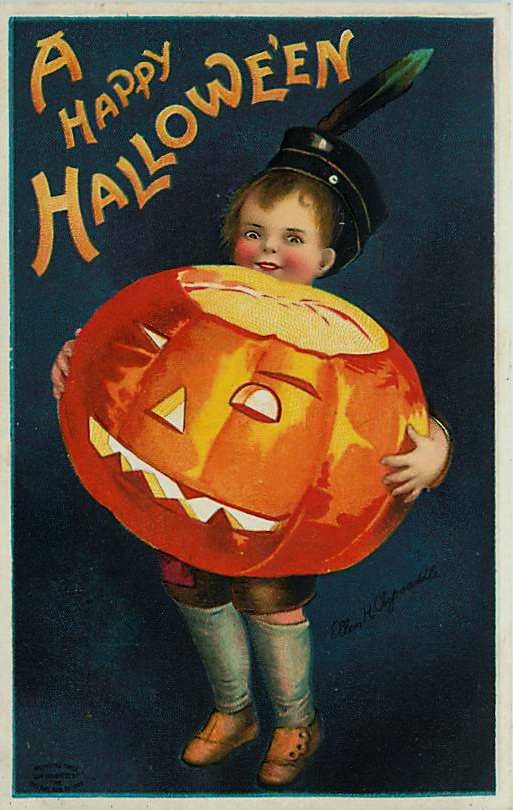
The face of Halloween


Far from an activity for children to do with their parents during October for Halloween, the original Jack-o-Lanterns, of the Irish myth, were actually quite terrifying looking and I can’t imagine children would have want to come close to any of them. This essential Halloween decoration item has a purpose and a story behind it. 
  
They were carved from turnips or beets rather than festive orange pumpkins, and were intended to ward off unwanted visitors; spirits, goblins and demons. When the Irish and Scots emigrated to America, bringing the tradition along, they found that pumpkins, native to America, made perfect fruits for carving. Pumpkin Jack-o-Lanterns have been an integral part of Halloween festivities ever since. 


The name “Jack O’ Lantern” was originally one of the numerous names given to ignis fatuus (Medieval Latin for “foolish fire”), another of which is “Will O’ the Wisps”, basically the odd light that can occasionally be seen over marshes, swamps, and the like.  “Jack O’ Lantern” first popped up being used this way around the mid-17th century in East Anglia, UK and spread from there through parts of England, Ireland, and Scotland. 
  
Also this name could originally derive from the practice of calling men generically “Dick, Jack, Tom, etc.”  In particular, men who were lower class, were often called generically “Jack” beginning around the 14th century in England. (This practice popped up again in the late 19th century in the United States where “Jack” was used for the name for a man where his real name is unknown).  Thus, when you see someone carrying a lantern in a distance at night that you see is a man, but you can’t make out who exactly it is, he is literally “man with a lantern”, a.k.a. “Jack of the Lantern” or “Jack O’ Lantern”. 


The truth is that the jack o’ lanterns and pumpkin carving are probably going to be around for a long time, at least that is what I hope so. I could not imagine a Halloween season without this mysterious folks. 

Even though the pumpkin is a simple vegetable, carved with a scary face and that alone makes it trick and it’s a perfect decoration for a spooky night; nowadays it is more commercialized in different ways. Just like masks changed from scary to sophisticated and expensive. The pumpkin has changed. 


Before, the image of the jack o’ lantern alone was commercialized in cards, masks, plates and different decorations items. Today, the pumpkin itself has suffered a major transformation.  Apparently to get the attention of the new generation, new stencils with images of Disney characters, Movie characters, Music Idols were created to carve on pumpkins. We can also count with light and sound effects.  Don’t get me wrong. I’m all about this cool new designs, there are very creative people out there BUT I just hope kids learn first to carve the original face of our beloved jack so this tradition won’t disappear completely. But the question is: the Jack -o-Lanter face,will it disappear? 


It's Halloween! ... if you are not excited then you have problems.


( Me every time it rains)


Scary Halloween my fellow.... Halloweeners !!! 
  
This is the time (month) of the year that we love! Most of you (especially inside the U.S.) can’t wait to see Halloween decorations, costumes and every product with a Halloween theme.  It’s on TV, on the radio, clothes stores,etc. I couldn't be any happier. 
 October is the best month because you know that you will find new and classic horror movies 24/7 and  of course your childhood Halloween classics. You will go to a restaurant and there will be a special menu and the place will be decorated. If you want to buy clothes you will enjoy it because spiders, bats, cats and ghosts won't be hard to find and don't get me started on the house decor available. 


I can't even start to explain why I like Halloween. As a matter of fact, I shouldn't. 

What's not to like about getting dressed up, using lots of make up and becoming someone else for a night? Actually, wearing more make up than you usually do.

Who doesn't like that? To pretend? or show your real face ? act? or be yourself? and what about the scary stories, the decoration and the sweet morbid atmosphere and the peaceful silence of the spirits. For me is as magical as Xmas but less sentimental and less mainstream. Sure, most people will go out and dress up in their costumes just for the sake of getting drunk but they will never get it, they will never get Halloween 

We really are alive on All Hallows' Eve and we do remember those who have already died. We look for signs all night. Are they real for one night? Are they watching us? Do they walk amongst us? We will never know. 

 Death is in the air. Do you feel it?

Tell me how do you feel about halloween.


Friday, October 28, 2016

The Evolution of Victorian Mourning and Rituals post-mort Photography Part 2


As time passes, many traditions fade into history. I clearly remember when funeral ceremonies were held at the deceased's home. It was a final way for them to say goodbye to their own space. Today, most people avoid this, finding it "too morbid." As my mother once said, "It gives me the chills just to think about a funeral in the house." This shift in perspective highlights a massive change in how we handle grief compared to the Victorians of the British Empire, for whom mourning was a serious, ritual-filled endeavor.
  
Victorian Mourning and Post-Mortem Photography Pt. 1 HERE


Historically, many Celtic nations across Europe observed the custom of keeping a vigil over the deceased until burial—a practice known as a "wake." This tradition served as a watchful period to ensure the individual had truly passed, as medical understanding of comas and "apparent death" was limited at the time.

While modern funerals are often managed by professional funeral homes to ease the burden on the bereaved, traditional wakes were deeply personal, private affairs held within the family home.

The Domestic Ritual When a wake was held at home, the body was typically prepared in the kitchen. While this lacks the sanitary standards we expect today, it was a common domestic necessity for the era. Once the deceased was prepared, invitations were sent; in these communities, failing to attend was often viewed as a significant sign of disrespect to the grieving family.

The Duration of the Vigil A wake could last anywhere from four days to a full week, primarily for two practical reasons:

  • Verification: The family remained by the bedside around the clock to ensure their loved one did not unexpectedly "awaken."

  • Travel Logistics: Before modern transportation, relatives often traveled great distances to pay their respects, requiring the family to delay the burial.

Post-Mortem Photography The length of these vigils is also why some historical post-mortem photographs show early signs of natural decay. To create a lasting, peaceful memory, photographers sometimes employed creative techniques—such as painting eyes over the eyelids—to give the deceased a more lifelike appearance for their final portrait.


The Parlor: A Symbol of Status

The wake was traditionally held in the parlor—the most formal room in the house. As the "public face" of the home, the parlor reflected a family’s social standing and community image; consequently, these dedicated spaces were most common among the upper classes. Hosting a wake in this room was considered a final act of devotion, allowing the family to remain close to their loved one as a last token of affection and respect.

Practical and Ornate Traditions

Because these vigils often lasted for several days, families utilized abundance of candles and fragrant floral arrangements. While these served as beautiful tributes, they were also essential for maintaining a pleasant atmosphere within the home during the extended viewing period.

Mementos of the Deceased

While affluent families often possessed portraits painted during a relative's lifetime, post-mortem photography remained a vital cultural practice. These photographs served as a final, tangible connection to the departed.

The desire to keep a piece of a loved one close extended beyond photography:

  • Mourning Jewelry: It was common to keep a lock of hair encased within a specialized pendant or brooch.

  • Lachrymatories: Mourners sometimes used "tear catchers"—small glass vials designed to collect and preserve tears shed during the period of grief.

These items were more than just objects; they were profound symbols of a family's enduring bond and the era's unique approach to remembrance.


The High Cost of Remembrance

For many families, particularly those of more modest means, saving for funeral arrangements was a somber but necessary priority. During this era, high mortality rates meant that many children tragically did not live past their fifth birthday. For these families, a single post-mortem photograph was often the only visual memory they would ever have of their child.

The Art of the Final Portrait

Photographers employed various styles to capture these final images. Many portraits depicted the subject resting peacefully in bed, creating a serene, "saint-like" appearance. However, other families preferred to capture an "illusion of life," wanting to remember their loved one as they were in their most active years.

To achieve this, photographers utilized specialized equipment:

  • Posing Stands: Subtle metal frames were often used to support the subject’s posture.

  • Natural Settings: The deceased was frequently positioned on a familiar chair or sofa to create a more lifelike, domestic scene.

These photographs, while perhaps striking to modern eyes, were deeply cherished treasures for families who had very little else to remember their lost loved ones by.


Victorian Mourning Customs and Folklore

Mourning in the 19th century was governed by a strict set of symbolic rituals designed to honor the deceased and protect the living. Many of these customs were rooted in deep-seated folk beliefs:

  • The Veiled Home: Mirrors and family portraits were often covered with cloth, stemming from the belief that a soul could become "trapped" within a reflection.

  • Marking Time: Clocks were frequently stopped at the exact moment of death to commemorate the transition, while a black ribbon was hung on the front door to signal the household's grief to the community.

  • The "Widow’s Weeds": The family wore strictly black attire. Women, in particular, bore the heaviest burden of these social expectations, often remaining in formal mourning for a year or longer.

The Funeral Procession

When the time came for the final farewell, the deceased was transported to the cemetery in an ornate funeral carriage. It was also common for affluent families to hire professional mourners. Known as "symbolic protectors," these individuals walked within the funeral procession or stood solemnly at the church doors to lend an air of gravity and prestige to the ceremony.

Protecting the Resting Place

During this era, a final and very practical concern remained: the threat of body snatchers. Because laws regarding the procurement of cadavers were inconsistent, "resurrectionists" would sometimes exhumed recently buried individuals to sell them to medical schools for anatomical dissection and lectures.

To prevent this, families utilized mortsafes—heavy iron cages or stone slabs placed over the grave. Only once the mortsafe was securely installed was the family’s duty to their loved one considered truly complete.


A Contrast in Mourning: Then and Now

Funeral arrangements in the Victorian era were conducted on an entirely different scale—far more complex and immersive than the streamlined processes we see today. In the modern world, the rise of the professional funeral home has allowed us to "outsource" the logistical and physical reality of death. For many, the goal today is to minimize contact with the deceased and the cemetery, often avoiding the topic of mortality altogether.

The Modern Disconnect Perhaps as a result of our fast-paced lives, there is a growing tendency to complete the burial process as quickly as possible. It seems that at some point in history, society developed a collective "allergy" to the presence of death. In a world where we prioritize speed and efficiency, we often seek to remain numb to the more difficult aspects of the human experience. However, death remains an inevitable reality, and no amount of efficiency can truly remove the inherent pain of loss.

A Shift in Perspective While we might look back and wonder if the Victorians were "obsessed" with death, their rituals provided a structured way to confront and process grief. Today, we have traded those long, intimate vigils for a more detached approach. Have we lost our ability to mourn, or have we simply found new ways to cope?

Whether the Victorian "Cult of Death" was a healthy expression of love or a macabre fixation is a fascinating question—and one we shall explore in another post.


Victorian Mourning and Post-Mortem Photography Pt. 1 HERE

Related Posts Plugin for WordPress, Blogger...